THE CENTRAL IDEA核心观点
The routing policy is as important as the second model: preserve reliable decisions and budget the work of reconsideration.分流策略与第二个模型同样重要:保留可靠判断,为复核过程设置明确预算。
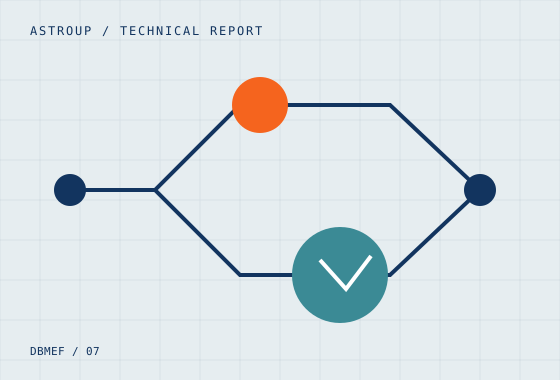
The challenge: not every frame deserves the same computation挑战:不是每一帧都需要同等计算
During inspection or servicing, a space robot repeatedly observes many familiar surfaces and a smaller number of ambiguous interfaces. A fast classifier can handle routine recognition, but a single uncertain decision can determine which object is approached or which tool is selected. Running a heavy model for every frame wastes opportunities for selective computation; accepting every fast prediction leaves no mechanism for reconsideration. The useful architectural question is where to place a second look.在检查或维修任务中,空间机器人会反复观察大量熟悉表面,以及较少但重要的模糊接口。快速分类器能够处理常规识别,但一次不确定判断就可能决定接近哪个对象、选择哪种工具。对每一帧调用重模型会错失选择性计算的机会,而接受全部快速预测又缺乏复核机制。真正有用的架构问题是:第二次判断应该放在哪里。
A practical perception stack needs a route for ordinary observations and a route for unresolved cases. The two routes should share an explicit candidate vocabulary, carry observation timestamps and return comparable decision records. This makes the allocation of computation visible to the task executive. DBMEF provides a useful technical starting point because it combines a discriminative proposal with conditional generative evaluation, and treats the decision to invoke that evaluation as part of the method.实用感知系统需要一条常规观察路径,以及一条未解决情形的处理路径。两条路径应共享明确的候选词表、携带观察时间戳,并返回可比较的决策记录。这样,任务执行器能够看见计算资源如何分配。DBMEF 提供了有价值的技术起点:它将判别式候选生成与条件生成式评价结合,并将是否调用后者纳入方法本身。
Paper mechanism: protect, shortlist, reconsider论文机制:保护、缩小候选、重新判断
DBMEF routes low-confidence predictions to a diffusion classifier while protecting confident ones. The classifier evaluates the discriminative model’s top candidates through conditional denoising error. Its protection threshold uses a quantile of confidence on correctly classified samples. Positive and negative conditions are combined, with optional voting. Table 1 reports ResNet-50 ImageNet accuracy increasing from 76.15% to 77.66%.DBMEF 将低置信度预测交给扩散分类器复核,同时保护高置信度结果。扩散分类器通过条件去噪误差评价判别模型给出的最高候选;保护阈值依据正确分类样本置信度的分位数确定。方法结合正、负条件,并可使用投票。原文表 1 报告 ResNet-50 在 ImageNet 上的准确率由 76.15% 提高至 77.66%。
Conditional denoising offers a different comparison from directly choosing the largest classification logit. Add a known noise realization to an encoded input, ask the noise predictor to estimate it under each candidate condition, then compare prediction errors. A smaller error indicates better agreement with that conditional model at the sampled noise level. The known noise is an evaluation target, so the procedure can compare alternatives without needing a newly annotated answer for the current image.条件去噪提供了不同于直接选择最大分类 logit 的比较方式:向编码后的输入加入已知噪声,要求噪声预测器在各候选条件下估计噪声,再比较预测误差。较小误差表示在当前采样噪声水平上,与该条件模型更一致。已知噪声充当评价目标,因此比较备选标签时不需要为当前图像临时提供人工答案。
Why routing is a first-class component为什么分流是核心组件
A second model does not automatically improve every first-model answer. The routing function determines which examples can change, and therefore controls both the opportunity to correct mistakes and the opportunity to introduce new ones. Evaluate those two flows separately: wrong-to-right and right-to-wrong. An aggregate accuracy number conceals their balance. A useful confusion audit records the original candidate list, trigger score, revised answer and the reason the revision was accepted.第二个模型并不会自动改善第一个模型的每次回答。分流函数决定哪些样本可以被修改,也就同时控制纠错机会与引入新错误的机会。应分别统计“错误变正确”和“正确变错误”两条流向;一个总体准确率会掩盖它们之间的平衡。实用审计记录应包含原始候选列表、触发分数、修订答案以及接受修订的原因。
Confidence is meaningful only in relation to the population used for calibration. For a proposed space-robot pipeline, maintain calibration slices for viewing angle, glare, target size and occlusion. Compare the fraction routed from each slice rather than assuming that a single global threshold distributes effort evenly. A scene condition that generates too many confident errors will not be fixed by increasing the slow-path budget alone; it needs a routing signal sensitive to that condition.置信度只有联系校准样本群体才有意义。针对空间机器人流水线,建议按观察角度、眩光、目标尺寸和遮挡维护校准切片,比较各切片的复核比例,而不是假定统一阈值可以均匀分配计算。如果某种场景产生大量高置信度错误,仅增加慢路径预算并不能解决问题,还需要对该条件敏感的分流信号。
Candidate construction and controlled comparison候选构造与受控比较
The candidate set is an information bottleneck: a subsequent comparison can only select among what it receives. In a proposed implementation, measure candidate recall separately from final accuracy. Include a mechanism for unresolved or out-of-catalogue observations when the visual evidence does not fit the available classes. Use consistent class descriptions, since changing the wording for one candidate can change the comparison independently of the image evidence.候选集合是信息瓶颈:后续比较只能在收到的选项中选择。建议将候选召回率与最终准确率分别测量。当视觉证据不符合已有类别时,应提供“未解决”或“目录之外”的表达。候选类别描述也应保持一致,因为单独改变某个候选的措辞,可能在图像证据不变时改变比较结果。
For reproducible noise-based comparison, share sampled noise and timestep selections across candidates within a trial. Repetition can then quantify whether the winning label is stable or depends on sampling variation. The number of trials becomes a resource control rather than an arbitrary constant. Stop when a predefined budget is exhausted, and preserve the score spread so that the executive can distinguish a decisive revision from a near tie.为了使基于噪声的比较可复现,同一轮各候选应共享噪声与时间步采样选择,再通过重复试验量化胜出标签是否稳定,还是依赖采样波动。试验次数由此成为资源控制量,而非任意常数。达到预设预算后停止,并保留分数间隔,使执行器能够区分明确修订和近乎平局的判断。
Proposed architecture: asynchronous visual verification集成设计:异步视觉复核
Place the fast classifier on the continuous observation path and send selected cases to an asynchronous verification queue. Each request should carry a frame identifier, object track identifier, candidate set, timestamp and decision deadline. The reply should identify the exact request it resolves. This prevents a slow result for an earlier view from silently replacing a newer classification after the camera or object has moved.将快速分类器放在持续观测路径上,把选中的案例交给异步复核队列。每次请求携带帧标识、对象轨迹标识、候选集合、时间戳和决策截止时间;回复应指出它解决的是哪次请求。这样可以避免相机或对象移动后,针对旧视角的慢速结果悄悄覆盖更新的分类。
The task executive can use different policies for different phases. During surveying, it may continue mapping while verification runs. Before committing to an object-specific operation, it may require a resolved identity or request another view. The control loop can continue using geometric tracking and its current motion policy. This architecture makes the slow model a bounded semantic service with explicit scheduling, rather than an unbounded computation embedded in every image callback.任务执行器可以按阶段采用不同策略:巡查时在后台复核的同时继续建图;提交对象特定操作前,要求身份已经明确,或请求另一个视角。控制回路仍可依靠几何跟踪与当前运动策略继续工作。这种架构让慢模型成为具有显式调度的有界语义服务,而不是嵌入每次图像回调中的无界计算。
Budgeting energy, memory and deadlines管理能耗、内存与截止时间
For the proposed design, average computation can be approximated as fast-path cost plus the routed fraction multiplied by verification cost. This equation makes the main levers explicit: reduce the trigger rate, reduce the candidate count, reduce repeated trials, or make each conditional evaluation cheaper. These choices affect different failure modes. Reducing the candidate count can remove the correct answer; reducing trials can make the decision noisier; raising the threshold can miss difficult examples.对建议架构,平均计算量可以近似表示为快速路径成本,加上分流比例乘以复核成本。这个表达式明确了主要调节量:降低触发率、减少候选数、减少重复试验,或降低单次条件评价成本。这些选择影响不同失败模式:候选太少可能移除正确答案,试验太少可能使决策波动,阈值改变则可能漏过困难样本。
Memory must be measured at system level. Even a rarely invoked verifier can occupy a large resident working set, while loading it on demand adds startup delay and bandwidth traffic. Compare resident, scheduled and shared-resource configurations on the actual target platform. Log energy per resolved decision as well as latency percentiles, queue length and deadline misses. A selective architecture becomes efficient only when these operational costs are included in the comparison.内存应在系统层面测量。即使很少调用,复核器也可能占据较大驻留工作集;按需加载则增加启动延迟与带宽流量。应在目标平台比较常驻、计划调用和共享资源配置,同时记录每次解决决策的能耗、延迟分位数、队列长度与截止时间违约次数。只有将这些运行成本计入比较,选择性架构的效率才具有实际意义。
Acceptance: useful corrections within the task window验收:在任务时间窗内完成有效纠错
Evaluate the fast model, unconditional verification and selective verification on the same episodes. Report candidate recall, corrected errors, newly introduced errors, unresolved cases and completed operations. Stress the queue with bursts of ambiguous frames, not only isolated images. The desired outcome is a perception system that knows when another calculation is useful, completes that calculation while the evidence is still relevant, and returns a decision the rest of the robot can actually use.在相同回合上比较快速模型、无条件复核与选择性复核,报告候选召回、纠正错误、新增错误、未解决案例和完成操作数。用连续模糊帧冲击队列,而不只测试独立图像。期望得到的感知系统应能够判断何时值得多算一次,在证据仍然有效时完成计算,并向机器人其他模块返回真正可以使用的决策。
SOURCE PAPER & REFERENCE MATERIAL原论文与参考资料
An Efficient Framework for Enhancing Discriminative Models via Diffusion Techniques
Chunxiao Li, Xiaoxiao Wang, Boming Miao, Chuanlong Xie, Zizhe Wang, Yao Zhu
AAAI · 2025 · Zizhe Wang · Tsinghua University