ASTROUP / RESEARCH & ENGINEERING
Space Embodied Intelligence太空具身智能
Research on perception, planning, onboard computing and validation.空间机器人感知、规划、星载计算与验证研究。
03 reviews · 12 technical reports03 篇综述 · 12 篇技术报告
Five research categories五个研究栏目
Research reviews研究综述
Spacecraft AI, foundation models and resource-aware autonomy.航天器人工智能、空间机器人基础模型与资源感知自主性。

AI for Spacecraft Sensing & Control航天器智能:从环境感知到控制闭环
Guidance, navigation, control and thermal management in one system view.人工智能在制导、导航、控制与热管理中的方法与研究进展。
AI for Space: A Survey of Guidance, Navigation, Control, and Thermal Management
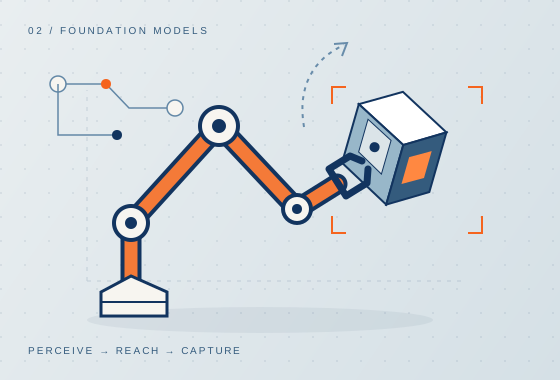
Foundation Models for Space Robots空间机器人基础模型:从认知到行动
Connect model architectures, physical adaptation and validation.空间机器人基础模型的架构、物理适应方法与验证要求。
Foundation Models for Autonomous Space Robotics: Architectures, Physical Adaptation, and Validation
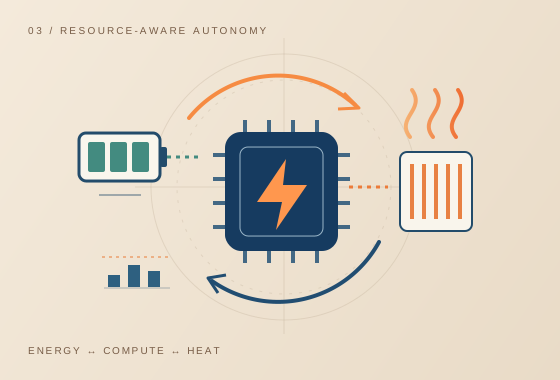
Resource-Aware Space Robot Autonomy空间机器人自主性:算力、能源与热约束
Make physical resource budgets part of every autonomous decision.计算、能源与热约束下的空间机器人规划和任务执行。
Resource-Aware Embodied Autonomy for Space Robots: A Review
Onboard efficiency星载高效计算
Compute, energy and heat budgets constrain how much intelligence can run onboard.算力、能源与散热预算有限,模型能力必须与持续运行成本共同设计。
Spectral modulation · layer selection · selective computation频谱调制 · 层级选择 · 按需计算
Spectral Modulation: Improving Model Capability Without Additional Inference Cost频谱调制:不增加推理开销的模型能力优化
Adjust model weights in the frequency domain without changing the inference architecture.在频域调整模型权重,不改变推理网络结构。
Unleashing the Potential of Large Language Models through Spectral Modulation
Layer-Wise Knowledge Analysis: Identifying Critical and Redundant Computation逐层知识分析:识别关键层与冗余计算
Analyze knowledge changes across model layers to identify critical and redundant computation.分析视觉语言模型各层的知识变化,识别关键计算与冗余计算。
Towards Understanding How Knowledge Evolves in Large Vision-Language Models
GitHub ↗
Selective Rethinking: Combining Fast Classification with Diffusion-Based Review选择性复核:快速分类与扩散模型的按需协同
Route uncertain classification results to a diffusion model for further evaluation.快速分类器处理常规样本,扩散模型复核低置信度结果。
An Efficient Framework for Enhancing Discriminative Models via Diffusion Techniques
GitHub ↗
Compressing Onboard Language Models Under a Fidelity Requirement行为保真约束下的星载语言模型压缩
Compose one static low-bit model from AWQ, GPTQ and AutoRound checkpoints, accepting each module substitution only when it closes the KL gap to the BF16 reference.在 AWQ、GPTQ、AutoRound 检查点间逐模块组合静态低比特模型,仅当替换缩小与 BF16 基准的 KL 差距时才予接受。
Compressing Onboard Language Models for Space Robots under a Behavioral-Fidelity Requirement
Trustworthy perception可信视觉感知
Changing illumination, occlusion and surface appearance make visual evidence difficult to trust.光照变化、遮挡与表面纹理干扰,使机器人既要看得准,也要能说明判断依据。
Patch attribution · visual stress testing图像块归因 · 视觉鲁棒性压力测试
Patchwise Attribution: Tracing Answers to Visual Evidence图像块归因:追溯模型回答的视觉依据
Estimate how image patches contribute to a vision-language model’s answer.估计各图像区域对视觉语言模型回答的贡献。
Patchwise Cooperative Game-based Interpretability Method for Large Vision-language Models
GitHub ↗
Semantic Adversarial Patches: Testing Object Detection Robustness语义对抗图案:测试目标检测的鲁棒性边界
Generate adversarial surface patterns to test object detector robustness.生成对抗性表面图案,测试目标检测器的识别稳定性。
AdvLogo: Adversarial Patch Attack against Object Detectors based on Diffusion Models
GitHub ↗Autonomous decisions实时自主决策
Delayed ground support and moving targets require timely decisions and independent review.地面支持存在时延,目标与任务状态持续变化,需要及时决策与自主复核。
Real-time evaluation · candidate-plan peer review实时评测 · 候选方案交叉评审
Real-Time Evaluation: Measuring Decision Quality Under Latency Constraints实时决策评测:同时衡量推理质量与响应时延
Evaluate reasoning quality and decision latency in a continuously changing environment.在持续变化的环境中,同时评估推理质量与决策时延。
Beyond Scaling: Assessing Strategic Reasoning and Rapid Decision-Making Capability of LLMs in Zero-sum Environments
GitHub ↗
Model Peer Review: Calibrated Scoring for Candidate Selection模型互评:通过评分校准选择候选方案
Compare candidate responses through model peer review and calibrated scoring.通过模型交叉评审与评分校准,比较并选择候选方案。
Scoring, Reasoning, and Selecting the Best! Ensembling Large Language Models via a Peer-Review Process
GitHub ↗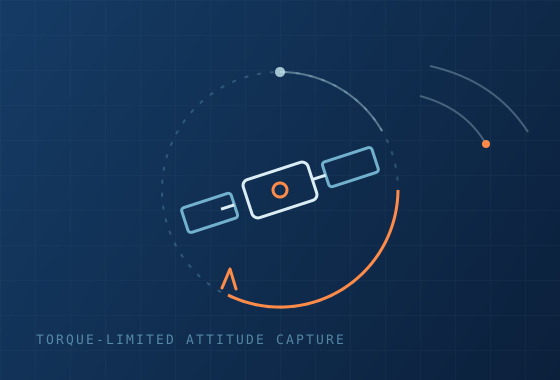
Selective Attitude Capture Under Torque Limits力矩受限下的航天器姿态捕获
Paired-outcome learning that adapts maneuver speed to uncertain braking authority.成对结果学习:面向不确定制动能力,选择性调节既有控制器的机动速度。
Paired-Outcome Learning for Selective Spacecraft Attitude Capture under Torque Limits
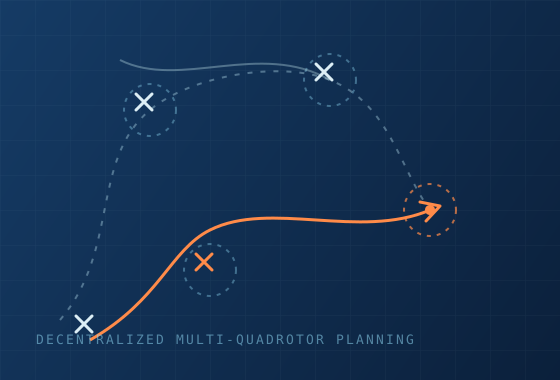
Decentralized Multi-Quadrotor Trajectory Planning去中心化多旋翼集群轨迹规划
Learning waypoints and passage events jointly for cooperative local planning.联合学习路径点与通过事件,实现多机协同的去中心化局部轨迹规划。
Learning Waypoints and Passage Events for Decentralized Multi-Quadrotor Trajectory Planning
Data & validation数据与场景验证
Rare events and expensive physical trials demand controllable, diverse test scenarios.罕见工况难以采集,真实试验成本高,需要可控生成测试场景并扩展验证覆盖。
State–action diffusion · semantic scene generation状态—动作联合扩散 · 语义场景生成
Joint State–Action Diffusion: Generating Controllable Test Scenarios状态—动作联合扩散:生成可控测试场景
Generate coupled states and actions, with explicit control over scenario difficulty.联合生成状态与动作,并控制测试场景的难度。
End-to-end Conditional Diffusion for Realistic and Controllable Visual Traffic Scenario Generation
Initial Noise Optimization: Improving Semantic Consistency in Image Generation初始噪声优化:提高图像生成的语义一致性
Optimize initial noise to improve agreement between generated images and text requirements.优化初始噪声,提高生成图像与文字需求的一致性。
Noise Diffusion for Enhancing Semantic Faithfulness in Text-to-Image Synthesis
GitHub ↗