THE CENTRAL IDEA核心观点
Compress computation with evidence about what each depth contributes, and inspect late changes in object and relation predictions.用各深度实际贡献的证据指导计算压缩,并检查对象与关系预测中的后期变化。
The challenge: preserve visual evidence under compute pressure挑战:在算力压力下保住视觉依据
A robot examining a spacecraft panel needs more than a plausible description. Its perception system must distinguish a visible latch from an expected latch, an open interface from an occluded one, and a nearby tool from an attached component. These distinctions matter because language becomes a bridge from observation to action. When a model changes an object label or spatial relation late in inference, the downstream executive receives a different world description even though the camera image has not changed.机器人检查航天器面板时,需要的不是一个貌似合理的描述。感知系统必须区分看见的锁扣与预期存在的锁扣、开放接口与被遮挡接口、旁边的工具与固定部件。这些区别决定语言如何将观察连接到动作。如果模型在推理后期改变对象标签或空间关系,即使相机图像未变,下游执行器收到的世界描述也已经不同。
At the same time, running every layer for every output token consumes resources that may also be needed for tracking and planning. The engineering question is therefore twofold: where does useful visual information become available, and which subsequent computation changes the decision? A layer-wise view creates a way to investigate both questions together. The goal is to retain the transformations that matter for physical interpretation while identifying computation that can be simplified with measurable consequences.与此同时,每个输出 token 都经过全部层,会占用本可用于跟踪和规划的资源。因此,工程问题有两个:有用的视觉信息在哪里形成,后续哪些计算又会改变判断?逐层分析提供了同时研究二者的手段。目标是在保留关键物理语义变换的同时,找到可以简化、且影响能够测量的计算。
Paper evidence: critical and mutation layers论文证据:关键层与突变层
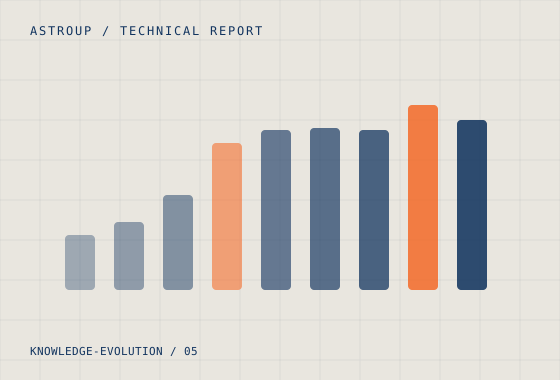
Using LLaVA-1.5 with a 32-layer Vicuna backend on AMBER and MSCOCO, the paper examines intermediate token probabilities, adjacent-layer Jensen–Shannon divergence and hidden-feature projections. It identifies rapid evolution, stabilization and mutation phases. Some late prediction changes accompany hallucinated entities. Skip-layer experiments preserve meaning in selected intervals, while more aggressive skipping can degrade descriptions.论文使用具有 32 层 Vicuna 后端的 LLaVA-1.5,在 AMBER 与 MSCOCO 上分析中间层 token 概率、相邻层 Jensen–Shannon 散度和隐藏特征投影,识别出快速演化、稳定与突变阶段。部分后期预测变化伴随实体幻觉;跳层实验表明,某些区间可以保持语义,而更激进的跳过会损害描述。
An intermediate readout can be understood as asking a repeated question: if this representation were decoded now, which token would it favor? A probability curve then records when a candidate enters contention and whether it remains competitive. Reading only the final winner discards this history. For an engineering investigation, the history can distinguish a weak visual hypothesis that never formed from a plausible hypothesis that was later displaced.中间层读出可以理解为反复提出同一个问题:如果现在就解码这个表征,它倾向于哪个 token?概率曲线记录候选何时具有竞争力,以及之后是否保持优势。只读取最终胜出者会丢失这段历史。对于工程分析,这段历史可以区分两种情况:视觉假设从未形成,或者曾经形成的合理假设后来被替代。
Interpreting distribution change如何理解分布变化
Jensen–Shannon divergence compares two complete probability distributions. A small value means the distributions are similar, not that either distribution is correct. Likewise, an unchanged top token can coexist with a large redistribution among alternatives. It is therefore useful to record three signals together: distribution divergence, the margin between leading candidates, and whether the semantically important prediction changed. These signals answer different questions and should not be reduced to one confidence number.Jensen–Shannon 散度比较两个完整概率分布。数值较小表示分布接近,并不代表其中任何一个正确。同样,最高概率 token 未变,也可能伴随其他候选之间的大幅重分配。因此,建议同时记录分布散度、领先候选的概率间隔,以及关键语义预测是否改变。这三个信号回答不同问题,不宜压缩成一个置信度数字。
Tokenization introduces another practical issue. A component name may occupy several tokens, while punctuation may need only one. For a proposed diagnostic dashboard, group tokens into semantic fields such as object identity, attachment state and relative direction. Compare equivalent fields across layers and examples. This prevents a large number of stable function words from overwhelming a small number of unstable terms that actually determine the robot’s next action.分词还会带来一个实际问题:一个部件名称可能占据多个 token,标点却只需一个。在诊断面板中,建议将 token 归并为对象身份、连接状态和相对方向等语义字段,跨层、跨样本比较对应字段。这样可以避免大量稳定功能词掩盖少数不稳定、却真正决定机器人下一步动作的术语。
Proposed diagnostic workflow for spacecraft inspection集成设计:面向航天器检查的诊断流程
Build a scene suite in which the camera pose, illumination and occlusion can be varied independently. Each scene should carry a structured reference: visible objects, visible interfaces, attachment relationships and uncertain regions. Ask short, targeted questions before requesting a long description. A question such as “Is the handle attached to this panel?” produces a more focused trace than an unrestricted scene narrative and makes disagreement easier to associate with a visual condition.建立能够独立改变相机位姿、光照与遮挡的场景集合。每个场景记录结构化参考:可见对象、可见接口、连接关系与不确定区域。先提出简短定向问题,再要求长描述。例如“这个把手是否连接在该面板上”,比不受限制的场景叙述更容易形成聚焦的推理轨迹,也更便于将分歧关联到具体视觉条件。
For each question, capture selected hidden states, candidate probabilities and the final structured answer. Replay the same image with controlled changes in the prompt, then replay changed images with the same prompt. These paired interventions separate sensitivity to wording from sensitivity to the evidence. A useful report shows the image, the layer trajectory and the semantic field together, enabling a reviewer to locate exactly where the interpretation diverged.对每个问题保存选定隐藏状态、候选概率和最终结构化答案。保持图像不变、控制性地改变提示词;再保持提示词不变、改变图像。这类成对干预用于区分措辞敏感性与证据敏感性。评审界面应同时显示图像、逐层轨迹和语义字段,让评审者定位解释从哪里开始分歧。
Proposed depth selection: measure before removing深度选择设计:先测量,再删减
Use the traces to nominate candidate layer intervals for removal, rather than making a global assumption that all late layers are interchangeable. Evaluate each candidate checkpoint with the same scene suite and output contract. A layer interval that appears redundant for object names may still contribute to spatial relations or negation. Score these fields separately, and require acceptable results on the most consequential fields before accepting a faster model.依据轨迹提名待移除层区间,不要全局假定所有后期层都可互换。对每个候选检查点使用相同场景集合和输出契约评测。某个区间对对象名称似乎冗余,却可能仍贡献于空间关系或否定判断。因此应分别统计字段分数,并在最关键字段达到要求后才接受更快模型。
Static depth reduction and dynamic early exit lead to different implementations. A statically shortened model offers a consistent graph and simpler timing analysis. A dynamic scheme can allocate more work to difficult inputs, but also needs reliable exit criteria and a compatible attention-cache strategy during autoregressive decoding. Compare both as system designs, including branch overhead, memory residency and worst-case latency. The objective is a better complete pipeline, not simply a smaller count of transformer blocks.静态减深与动态提前退出对应不同实现。静态缩短模型拥有固定计算图,时序分析更简单;动态方案可以为困难输入分配更多计算,但还需要可靠退出条件,以及自回归解码时兼容的注意力缓存策略。两者应作为完整系统设计比较,包括分支开销、驻留内存和最坏延迟。优化目标是更好的整体流水线,而不仅仅是减少 Transformer 块数。
Proposed runtime response to semantic disagreement运行时设计:响应语义分歧
A compact monitor can focus on a small set of action-relevant fields instead of storing every hidden tensor. If an attachment state changes between selected readouts, the task executive can request a closer view or an additional observation before committing to the corresponding manipulation. The monitor supplies a reason for acquiring information: a specific field changed, and a particular observation can help resolve it. This creates a direct link between internal model diagnostics and embodied information gathering.轻量监测器可以只关注少量动作相关字段,而不保存全部隐藏张量。如果选定读出点之间的连接状态发生变化,任务执行器可以在提交对应操作前请求更近视角或补充观察。监测器提供了明确的信息获取理由:哪个字段变化了,哪种观察有助于解决分歧。这样便建立了模型内部诊断与具身主动观测之间的直接联系。
Thresholds should reflect the cost of the decision. A descriptive log entry and a grasp target need not use the same escalation rule. Record the observation timestamp alongside the proposed answer, so a stable prediction is not confused with a current prediction. In a moving scene, additional deliberation can make the input stale; a refresh of visual evidence may be more valuable than further language computation on an old frame.阈值应体现决策代价,普通描述日志与抓取目标不必采用相同升级规则。建议将观察时间戳与候选答案一并记录,避免把稳定预测误认为当前有效预测。对于运动场景,进一步推理可能使输入过时;刷新视觉证据可能比继续对旧帧进行语言计算更有价值。
Evaluation: connect internal traces to task outcomes评测:把内部轨迹连接到任务结果
The proposed scorecard combines semantic field accuracy, disagreement detection, additional observations, end-to-end latency and task completion. Measure how often the monitor identifies a wrong decision, how often it interrupts a correct one, and whether the extra observation resolves the ambiguity. Compare the full model, a statically reduced model and a monitored model on identical episodes. This turns interpretability into an actionable design instrument: evidence about where computation helps, where it changes a judgment, and what the robot should do next.建议指标卡联合统计语义字段正确率、分歧检出、补充观察次数、端到端延迟与任务完成情况。测量监测器发现了多少错误决策、打断了多少正确决策,以及额外观察是否解决歧义。在相同回合上比较完整模型、静态减深模型和带监测的模型。这使可解释性成为可操作的设计工具:说明计算在哪里有帮助、在哪里改变判断,以及机器人接下来应该获取什么信息。
SOURCE PAPER & REFERENCE MATERIAL原论文与参考资料
Towards Understanding How Knowledge Evolves in Large Vision-Language Models
Sudong Wang, Yunjian Zhang, Yao Zhu, Jianing Li, Zizhe Wang, Yanwei Liu, Xiangyang Ji
CVPR · 2025 · Zizhe Wang · Tsinghua University