THE CENTRAL IDEA核心观点
For a space robot, a useful answer should come with evidence that survives controlled intervention. Separate model faithfulness, human plausibility, and action validation.空间机器人的有效回答应当具有经得起干预检验的视觉依据。模型忠实度、人类可理解性与动作验证需要分别评估。
The challenge: an answer must identify its evidence挑战:回答需要说明视觉依据
A space manipulator approaching a service panel must distinguish a graspable handle from a cable, a port from a reflection, and an accessible feature from one hidden behind another component. A vision-language model can express the scene in convenient language, but that language alone leaves a critical engineering question unanswered: which visual information actually supported the decision? When the next operation changes contact state, a plausible sentence is a weak substitute for knowing whether the correct interface was perceived.空间机械臂接近服务面板时,需要区分可抓取把手与线缆、接口与反光,以及可直接接近的结构和被其他部件遮挡的结构。视觉语言模型能够用自然语言描述场景,但语言本身不能回答一个关键工程问题:判断究竟依赖了哪些视觉信息?当下一步操作将改变接触状态时,仅有合理的文字描述,远不足以确认目标接口已经被正确识别。
This motivates an evidence layer between semantic understanding and task execution. The layer should answer a precise question for a fixed image, instruction, and candidate response: which regions increase the model’s support for that response? Patchwise Cooperative provides a concrete way to ask that question. Its contribution is especially useful for reviewing failed inspections, comparing perception models, and deciding which observations deserve closer examination before a plan is accepted. These are distinct uses of the same attribution signal, with different latency requirements.因此,可以在语义理解与任务执行之间增加证据层。对于固定图像、指令和候选回答,证据层应明确指出:哪些区域提高了模型对该回答的支持程度?Patchwise Cooperative 为这一问题提供了具体方法。同一种归因信号可以用于巡检失败复盘、感知模型比较,也可以帮助判断在接受计划之前应重点复查哪些观测;这些用途对时延的要求不同。
A cooperative game over image patches将图像块组织成合作博弈
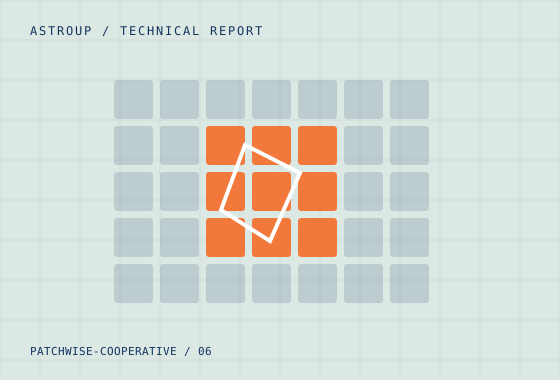
The paper divides an image into a 12 × 12 grid. Each patch becomes a player; a coalition is a subset of visible patches. For a fixed text input T and answer A, the game’s utility is the model’s generation likelihood P(A | I, T). The contribution of patch i is assessed by comparing a coalition with and without that patch. Averaging marginal contributions over coalition contexts produces a Shapley attribution. This matters because two individually ambiguous regions may become informative together: contribution is evaluated in context, rather than inferred from brightness or a single attention coefficient.论文将图像划分为 12 × 12 网格,每个图像块是一个参与者,可见图像块的子集构成联盟。固定文本输入 T 和回答 A 后,模型生成该回答的概率 P(A | I, T) 是博弈效用。比较包含与不包含第 i 个图像块的联盟,可以获得其边际贡献;再跨联盟背景求平均,得到 Shapley 归因。这样做的重要性在于,两个单独看并不明确的区域,组合后可能提供有效信息;贡献取决于上下文,而不是亮度或某个注意力系数。
The following expression is the standard Shapley formulation of this mechanism. C is the set of patches, N its size, and u is the answer-likelihood utility. Positive attribution means that revealing a region tends to support the chosen answer across coalition contexts. It is therefore necessary to record the answer being explained alongside the heatmap. A heatmap for “the port is visible” and one for “the port is obstructed” need not identify the same evidence, even when they are computed from an identical camera frame.下式用标准 Shapley 表达式概括这一机制。C 表示图像块集合,N 为其大小,u 为回答概率效用。正归因意味着在不同联盟背景中,显示该区域通常会增强指定回答的支持程度。因此,热力图必须同时记录被解释的回答。即使来自同一相机帧,“接口可见”与“接口受阻”这两个回答对应的视觉依据,也可能不同。
Local approximation makes the game tractable用局部代理降低计算成本
Enumerating all subsets of 144 patches is impractical. The paper instead queries the large model on 1,000 binary patch masks for one input and fits a small two-layer perceptron to the resulting answer probabilities. A binary mask indicates which patches are retained; the surrogate learns the relationship between visibility patterns and response likelihood. Its squared-error objective is local to that image–question–answer combination. Monte Carlo sampling then estimates patch contributions using the cheaper surrogate rather than repeatedly executing the full vision-language model for every coalition.144 个图像块的全部子集无法直接穷举。论文针对一个输入生成 1,000 个二值图像块掩码,查询大模型的回答概率,再用一个两层感知机拟合这些结果。二值掩码表示哪些图像块保留,代理模型学习可见区域组合与回答概率之间的关系。平方误差目标针对当前图像、问题与回答组合建立;随后通过蒙特卡洛采样,在计算更便宜的代理模型上估计图像块贡献。
This is a useful distinction for deployment planning: the lightweight network is an explanation surrogate, not a compressed replacement for the perception system. In a proposed review pipeline, the fitting stage should retain a held-out set of masks, report probability-fit error, and preserve the mask seed for reproducibility. A visually appealing map with poor local fit should be treated differently from a map whose surrogate reproduces the queried model closely. These additional checks make the approximation visible to engineers rather than hiding it inside a visualization.部署规划中需要明确:这个轻量网络是解释代理,并非替代整个感知系统的压缩模型。在本文建议的审查流程中,可保留一组未参与拟合的掩码,报告概率拟合误差,并保存掩码随机种子。局部拟合较差但外观清晰的热力图,与准确复现大模型查询结果的热力图,应采用不同的审查权重。这些额外检查让工程人员能够了解近似质量。
Faithfulness and plausibility are different tests忠实度与可理解性分别检验
The paper evaluates faithfulness with ROAD perturbation tests. Most Relevant First removes regions ranked important; Least Relevant First removes low-ranked regions. A useful attribution should produce a strong likelihood decline in the first case and a smaller change in the second. This intervention-based test is more informative than asking whether a highlighted region simply looks reasonable. The evaluation perturbs selected pixels using their neighbors rather than relying only on a conspicuous blank rectangle, reducing the extent to which the removal operation itself dominates the result.论文使用 ROAD 扰动测试评价忠实度。Most Relevant First 优先移除高重要性区域,Least Relevant First 优先移除低重要性区域。有效归因应使前者的回答概率明显下降,而后者变化较小。与仅凭热力图看起来是否合理相比,这种干预测试更有解释力。评估使用邻域像素替换选定像素,降低明显空白遮挡自身对结果的影响。
For plausibility, the authors collect 6,000 annotations from 60 participants and retain 891 images with aggregated human patch selections. TID1 measures the distance from the model’s highest-ranked patch to the nearest of three human-selected patches; TID3 uses the nearest pair among both top-three sets. These are spatial proximity measures, not overlap scores or proof that all three selections agree. On LLaVA-v1.5-7B, the reported TID1/TID3 values are 0.905/0.387, compared with 3.642/1.632 for LVLM-Interpret. Keeping the metric definition beside the numbers prevents an overly broad reading of the improvement.在人类可理解性方面,作者收集了 60 名参与者的 6,000 次标注,最终保留 891 张具有聚合人工图像块选择结果的图像。TID1 衡量模型最重要图像块到人工选择的三个图像块中最近一个的距离;TID3 取双方前三个图像块之间最近的一对。这是空间接近程度指标,不是重叠率,也不代表三个位置全部一致。LLaVA-v1.5-7B 上,本文方法的 TID1/TID3 为 0.905/0.387,LVLM-Interpret 为 3.642/1.632。指标定义应与数值同时展示。
Reading model behavior across layers and questions跨层与跨问题观察模型行为
The experiments cover LLaVA-v1.5 and ShareGPT4V in 7B and 13B sizes, with results averaged over three random seeds. The paper also compares question paraphrases and image styles, and inspects explanations derived from intermediate layers. These analyses make attribution a diagnostic instrument: it can show where evidence becomes concentrated as a response develops. The layer examples suggest that a correct response and concentrated target evidence can emerge together, while some earlier responses rely on more dispersed information.实验覆盖 LLaVA-v1.5 与 ShareGPT4V 的 7B、13B 版本,结果取三个随机种子的平均值。论文还比较了问题改写、图像风格以及中间层解释。归因因此不仅是展示工具,也成为诊断工具:可以观察回答形成过程中,视觉证据在何处逐渐集中。论文的层间示例显示,正确回答与目标区域证据集中可能同时出现,而部分较早阶段的回答依赖更分散的信息。
For engineering review, concentration should remain a descriptive signal. Consider a question asking whether a collision corridor is empty: broad image coverage may be exactly what that question requires. Conversely, a sharply focused map can still point to the wrong connector. A proposed task-aware review should therefore distinguish object identification, object absence, attribute recognition, and clearance assessment. Each question family needs a suitable expected evidence structure. This avoids turning a useful diagnostic pattern into a universal acceptance rule.工程审查中,集中程度应作为描述性信号使用。例如,判断碰撞通道是否为空,本来就需要覆盖较大的图像范围;而高度集中的热力图也可能指向错误连接器。因此,本文建议按对象识别、对象不存在判断、属性识别与通行空间评估分别建立问题类型,并为每类任务定义适当的证据结构,避免将有用的诊断现象变成通用准入规则。
Engineering mapping: an evidence packet for each decision工程映射:为每次决策建立证据包
A proposed space-robot implementation can package the camera frame, crop coordinates, instruction, candidate answer, model version, attribution map, and perturbation curve as one evidence record. The record should be linked to the relevant target instance and planned operation. If a grasp proposal refers to a latch, an operator should be able to inspect both the attributed region and the geometric latch estimate without manually aligning unrelated logs. This turns explainability into a traceable interface between semantic perception and the existing robotics stack.面向空间机器人的一种实现方式,是将相机帧、裁剪坐标、指令、候选回答、模型版本、归因图和扰动曲线组成一个证据包,并关联目标实例及计划执行的操作。如果抓取建议指向锁扣,审查者应能直接对照归因区域与锁扣几何估计,无需人工对齐分散日志。可解释性由此成为语义感知与机器人系统之间可追溯的接口。
A practical integration can use two timescales. The operational perception loop produces detections and estimates at its normal cadence. A separate analysis service processes selected frames after confidence drops, model disagreement, operator requests, or task failures. Attribution results can then guide a closer view, a request for a different question, or offline data curation. These are proposed control-interface choices: thresholds should be determined from task validation, and the physical safety supervisor continues to evaluate geometry, contact constraints, and reachable motion.实际集成可采用两个时间尺度:运行中的感知环以正常频率输出检测和状态估计;独立分析服务在置信度下降、模型分歧、操作员请求或任务失败时处理选定帧。归因结果可用于安排更近的观测、改写问题,或离线筛选数据。这里提出的是控制接口设计,触发阈值应通过任务验证确定,物理安全监督器仍负责评估几何、接触约束及可达运动。
A concrete evaluation plan可执行的评估方案
Build a review set around interfaces that matter to the mission: grasp points, fasteners, cables, ports, damage indicators, and exclusion regions. For each frame, collect a short task-specific question and independent region annotations. Compare answer quality before comparing heatmaps. Then evaluate deletion curves, attribution stability under paraphrase, sensitivity to crop scale, and the relationship between explanation quality and downstream decision errors. Split data by hardware instance and viewing sequence so that repeated frames do not inflate the apparent generalization of the explanation pipeline.围绕任务关键接口建立审查集,包括抓取点、紧固件、线缆、接口、损伤标志及禁入区域。每帧配套简短的任务问题和独立区域标注,先比较回答质量,再比较热力图。随后检验删除曲线、问题改写稳定性、裁剪尺度敏感性,以及解释质量与下游决策错误的关系。按硬件实例和观测序列划分数据,避免重复帧夸大解释流程的泛化表现。
Measure explanation latency separately from perception latency, along with large-model query count, surrogate fitting cost, peak memory, and review throughput. Retain failures where the answer is right for the wrong region and where the answer is wrong despite plausible evidence. Those cases are valuable for selecting new data and refining task prompts. The engineering outcome is a repeatable evidence workflow: semantic claims become inspectable, failures become attributable, and model changes can be judged by the visual information they actually use.解释时延应与感知时延分开记录,同时统计大模型查询次数、代理拟合成本、峰值内存和审查吞吐量。保留“回答正确但依据错误区域”以及“依据看似合理但回答错误”的样本,用于补充数据与改进任务提问。最终形成可重复的证据工作流:语义判断可以检查,失败原因可以追踪,模型更新可以依据其实际使用的视觉信息进行评价。
SOURCE PAPER & REFERENCE MATERIAL原论文与参考资料
Patchwise Cooperative Game-based Interpretability Method for Large Vision-language Models
Yao Zhu, Yunjian Zhang, Zizhe Wang, Xiu Yan, Peng Sun, Xiangyang Ji
TACL, volume 13, pp. 744–759 · 2025 · Zizhe Wang: Tsinghua University