THE CENTRAL IDEA核心观点
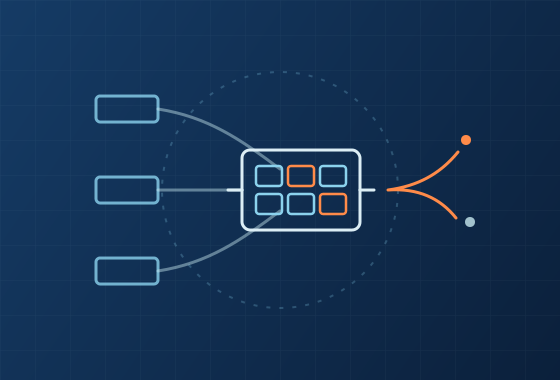
Do not compress onboard, and do not accept the implicit behavioral drift of generic post-training quantization. Treat compression as a ground-segment step that emits one static artifact: assign each linear module to the quantizer family—AWQ, GPTQ or AutoRound—whose substitution keeps the final next-token distribution closest to the BF16 model validated on the ground.不在星上压缩,也不接受通用后训练量化带来的隐式行为漂移:把压缩视为地面段步骤,产出唯一的静态制品——逐线性模块在 AWQ、GPTQ、AutoRound 三个量化族中择优,验收标准是该模块替换后,最终下一词分布与地面验证过的 BF16 基准更接近。
The challenge: flight rules for onboard language models挑战:星载语言模型的飞行规则
Language models are being explored as the interface through which space robots interpret operator commands and select among verified skills. Running them onboard means low-bit compression—and flight use adds requirements that generic post-training quantization leaves implicit: a fixed memory budget and storage format decided before launch, a static artifact placed under configuration control, and behavior that stays close to the full-precision model validated on the ground.语言模型正在被探索作为空间机器人理解操作指令、在已验证技能库中进行选择的接口。让模型在星上运行就必须做低比特压缩,而飞行使用还附加了通用后训练量化不曾明说的三条规则:存储格式与内存预算在发射前固化;模型是受配置管理的静态制品;行为必须贴近地面验证过的全精度模型。
These rules turn compression from an accuracy-versus-size trade-off into a verification problem. A compressed model that drifts from the validated reference in uncommon contexts is not a smaller model—it is a different model, and one that has never been reviewed. The paper's framing is precise: for flight, behavioral fidelity to the reference is a requirement, not a metric.这些规则把压缩从“精度换体积”的权衡变成了验证问题:一个在罕见情境中偏离已验证基准的压缩模型,并不是更小的模型,而是另一个从未评审过的模型。论文的界定很准确:对飞行而言,相对基准的行为保真是一项要求,而不只是一个指标。
Compression as a ground-segment step压缩是地面段步骤
The authors move the entire compression pipeline to the ground segment. Nothing adapts onboard: the artifact uploaded to the spacecraft is one static low-bit model, produced before flight, frozen under configuration control, and evaluated against the BF16 reference with the same discipline as any other flight software delivery. This separation matters operationally—onboard computing is spent on running the model, never on deciding what the model should be.作者把整条压缩流水线移到地面段:星上不做任何自适应——上传到航天器的是发射前生成的唯一静态低比特模型,受配置管理冻结,并以与任何其他飞行软件交付物相同的纪律对照 BF16 基准完成评估。这种分离在运行层面很重要:星上算力只用于运行模型,绝不用于决定模型应该是什么。
A ground-segment view also clarifies who signs off. Because the artifact is static and the reference is the ground-validated model, the acceptance question becomes measurable: does every accepted substitution move the final output distribution closer to the reference, or at least not farther? That question can be answered exhaustively before flight, module by module, without touching the onboard stack.地面段视角也明确了签收责任:制品是静态的,基准是地面验证模型,验收问题因此可以量化——每一次被接受的替换,是否让最终输出分布更接近基准,至少不更远?这个问题可以在发射前逐模块穷举回答,完全不触碰星上软件栈。
Three mechanisms of QSelectQSelect 的三个机制
The method, QSelect, combines three mechanisms. First, module-level composition: starting from compatible AWQ, GPTQ and AutoRound checkpoints of the same base model, each linear module is assigned to exactly one quantizer family, so the final artifact mixes families layer by layer rather than committing to a single one. Second, output-level scoring: every candidate substitution is scored at the final next-token distribution, using the forward KL divergence from the BF16 reference. Third, fidelity-gated acceptance: in the default fidelity mode—no labels, no tuned thresholds—a substitution is accepted only when it decreases that KL divergence; an optional target-adapted mode adds answer likelihood on a small labeled set for task-specific tuning.QSelect 由三个机制组成。第一,模块级组合:从同一基座的 AWQ、GPTQ、AutoRound 兼容检查点出发,每个线性模块被分配给且仅分配给一个量化族,最终制品逐层混合不同量化族,而不是整体押注单一方法。第二,输出级打分:每个候选替换都在最终下一词分布上评分,使用相对 BF16 基准的前向 KL 散度。第三,保真门控验收:默认保真模式不需要标签或调阈值,只有当替换使 KL 散度下降时才接受;可选的目标适配模式在小规模标注集上叠加答案似然,用于面向任务的调优。
The acceptance gate is what makes the scheme flight-compatible. Each substitution must argue for itself against the reference; anything that cannot is refused. The result is a composed model whose every module carries a documented, distribution-level reason for being there—exactly the kind of evidence chain a configuration-control board can review.验收门是这套方案能够上天的关键:每次替换都必须相对基准自证,无法自证的一律拒绝。最终组合模型中的每个模块都带有可追溯的分布级证据——这正是配置管理委员会能够评审的证据链。
Why score at the final output为什么在最终输出上打分
A natural alternative is to score substitutions by similarity of intermediate representations—cheaper and smoother. In a matched scaffold, the paper shows the final-output criterion is strictly better where it counts: scoring at the next-token distribution gives lower held-out KL than representation-similarity scoring in all 12 paired runs. Hidden-state similarity can look reassuring while the logits—the part the operator actually reads—drift.一个自然的替代方案是按中间表征相似度给替换打分——更便宜也更平滑。论文在相同的脚手架下证明,在真正要紧的地方,最终输出准则严格更优:以下一词语分布打分在全部 12 组成对实验中取得比表征相似度打分更低的留出 KL。隐状态相似看起来令人安心,而操作员实际读到的 logits 却可能已经在漂移。
For teams building similar pipelines, the transferable lesson is the scoring location, not the quantizers. Whatever compression families are on the table, acceptance should be decided where behavior is observed—at the model's output distribution—because that is the only level at which "close to the validated reference" has an operational meaning.对搭建类似流程的团队,可迁移的经验是打分位置而非具体量化器:无论候选有哪些压缩族,验收都应在行为可观测处——模型输出分布——决定,因为“贴近已验证基准”只在这一层才有工程含义。
Results: composed models win all six settings结果:组合模型在全部六组设置中胜出
On DeepSeek-R1-Distill-Qwen-7B, Llama-3.1-8B and Llama-3.2-3B at 3 and 4 bits, composed models reach lower mean held-out perplexity than every single-family model in all six model-and-bitwidth settings, and the fidelity mode lowers perplexity and KL further on top. With labels drawn from the training or development splits of the evaluated task families, the target-adapted mode raises 3-bit pooled accuracy on the two Llama models by 4.3 points.在 DeepSeek-R1-Distill-Qwen-7B、Llama-3.1-8B 与 Llama-3.2-3B 上、3 与 4 比特下,组合模型在全部六组“模型×位宽”设置中的平均留出困惑度均低于任一单量化族模型,保真模式在此之上进一步降低困惑度与 KL。使用评测任务族训练或开发集的标签时,目标适配模式把两个 Llama 模型的 3 比特合并准确率提高了 4.3 个百分点。
The pattern of results matches the mechanism: no single quantizer family is best everywhere, so module-level selection harvests complementary strengths; and because acceptance is gated by fidelity to the reference, the composed model's aggregate gains do not come at the price of unexplained local regressions.结果模式与机制相互印证:没有任何单一量化族处处最优,模块级选择因此能够汲取互补优势;而由于验收以相对基准的保真度为门,组合模型的总体收益并不以来路不明的局部回退为代价。
Where the method applies—and its boundaries方法适用条件与边界
The method presumes compatible checkpoints of the same base model across quantizer families—without them, module-level composition has nothing to select from. The fidelity gate certifies distribution closeness, not task correctness: a composed model can be close to a reference that is itself wrong on some task family, which is why the optional target-adapted mode and task-level evaluation remain necessary before flight. And the largest headroom sits at aggressive bit-widths: at 3 bits the choice of quantizer matters most, which is where the composed approach shows its clearest advantage.该方法以同一基座、跨量化族的兼容检查点为前提——没有它们,模块级组合无从选择。保真门保证的是分布贴近而非任务正确:组合模型可能贴近一个本身在某些任务族上出错的基准,因此上天前仍需可选的目标适配模式与任务级评估。最大的裕度在激进位宽处:3 比特时量化器的选择影响最大,也正是组合方法优势最明显的地方。
The authors are careful about the claim boundary: the evidence supports composed compression under a fidelity requirement on the evaluated models and task families, not a universal guarantee for arbitrary base models or quantizers. For adoption, that honesty tells reviewers exactly which parts of the pipeline must be re-run—checkpoint generation, fidelity gating and task evaluation—when the base model changes.作者对结论边界保持谨慎:证据支持的是在所评模型与任务族上、带保真要求的组合压缩,而非对任意基座或量化器的普遍保证。对工程采用而言,这种坦诚明确告诉评审:基座更换时,流水线中的检查点生成、保真门控与任务评估三段必须重跑。
Engineering mapping and evaluation boundaries工程映射与评估边界
Mapped to a flight program, QSelect sits entirely in the ground segment: it consumes the validated BF16 reference and the candidate checkpoints, and emits one static low-bit artifact plus its acceptance log—the KL delta of every admitted substitution. Onboard, the model loads into the fixed memory budget and storage format decided at design time; runtime assurance reduces to monitoring inputs and outputs, because the artifact itself never changes.映射到型号流程:QSelect 完全位于地面段——输入是已验证的 BF16 基准与候选检查点,输出是一个静态低比特制品及其验收日志(每次被接受替换的 KL 变化量)。星上模型装载进设计时固化的内存预算与存储格式;由于制品本身永不变化,运行时保证退化为对输入输出的监控。
A concrete evaluation plan for adoption: regenerate the quantizer-family checkpoints for the target base model; run fidelity-gated composition with frozen settings; then evaluate the artifact on a task matrix that deliberately oversamples the command-and-skill-selection contexts expected in orbit, reporting perplexity, KL and task accuracy side by side. Only when the artifact reproduces the reference's behavior on contexts the composition process never saw should it enter configuration control as a flight candidate.面向采用的可执行评估方案:针对目标基座重新生成各量化族检查点;以冻结设置运行保真门控组合;随后在刻意超采样在轨指令理解与技能选择情境的任务矩阵上评估制品,并列报告困惑度、KL 与任务准确率。只有当制品在组合过程从未见过的情境中依然复现基准行为时,它才应作为飞行候选纳入配置管理。
SOURCE PAPER & REFERENCE MATERIAL原论文与参考资料
Compressing Onboard Language Models for Space Robots under a Behavioral-Fidelity Requirement
Jia Deng, Zizhe Wang, Xin Lu, Yi Huang, Zehao Jia
arXiv preprint arXiv:2610.29302 · 2026